
Sugar is among the world’s oldest and most actively traded commodities. Its global market interconnects farmers, industrial refineries, shipping companies, commodity traders, brokers, banks, funds, and national regulatory authorities. In modern commerce, sugar stands out for its relatively stable industrial demand and periodically sharp price swings influenced by climate shifts, biofuel economics, and trade policies.
⸻
- Main forms of sugar traded
• ICUMSA 45 (Refined white sugar)
Premium-quality sugar used for human consumption and industrial food manufacturing. Highly standardized, widely demanded, and priced above raw sugar.
• VHP / Raw Sugar (Very High Polarity)
Less refined, intended for further processing in destination-country refineries. This is the workhorse of large-volume shipments.
• Industrial raw sugar
Used for ethanol production, pharmaceuticals, bio-processing, and other industrial applications.
⸻
- Key producing countries & global trade flows
• Brazil — the global leader by far, often responsible for over one-third of all exported sugar.
• India — huge producer with exports heavily influenced by domestic market protection and government incentives.
• Thailand — a major Asian exporter of VHP sugar.
• European Union — more importer than exporter; acts as price stabilizer and regulator.
⸻
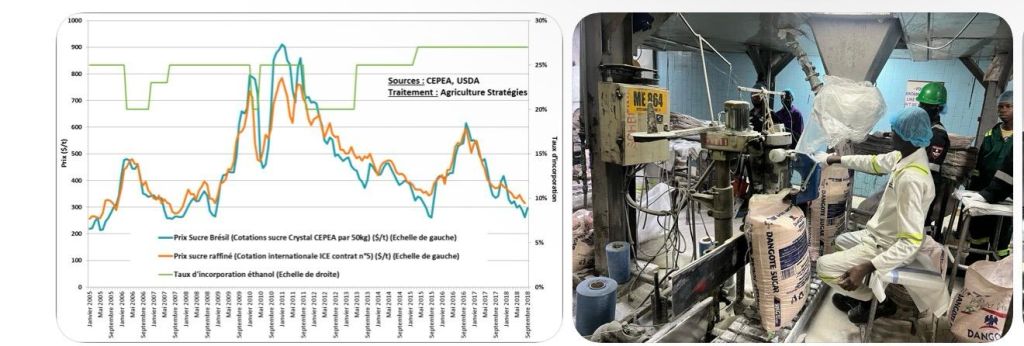
- Price dynamics & volatility drivers
Sugar pricing is strongly affected by:
• climatic conditions (El Niño, La Niña cycles, rainfall vs drought),
• biofuel markets (sugar vs ethanol production in Brazil),
• global oil prices (due to ethanol-petroleum correlation),
• foreign-exchange movements (USD, BRL, INR),
• governmental export restrictions or subsidies,
• industrial consumption trends, including seasonal spikes.
When petroleum prices rise, Brazilian mills often divert more sugarcane into ethanol rather than sugar — reducing supply and pushing sugar prices upward.
⸻
- Trading mechanism & common commercial structures
• Long-term supply contracts between producers and industrial buyers
• Spot deals for opportunistic purchases based on price timing
• Forward contracts & hedging strategies in commodity exchanges (ICE US, NYBOT)
• Letter of Credit (LC), SBLC, or DLC transactions for secure international payment
• Bank-to-Bank operations with AML/KYC documentation
• Inspection protocols (SGS / Bureau Veritas) for quality verification before shipment
For large-scale deals (e.g., 50,000–150,000 MT per shipment), banks and legal compliance desks typically require:
• Proof of Funds (POF)
• Know-Your-Customer (KYC) documentation
• Past performance / verifiable track record
• Shipping insurance and performance guarantee clauses
• Standard Incoterms (FOB, CIF, CFR)
⸻
- Logistics, ports, and delivery chain
From sugarcane field → mill → refinery → packaging → storage silo → bulk cargo vessel → destination port → importer — the chain is highly optimized and time-sensitive. Delays at any stage can lead to demurrage charges, port congestion fees, and contractual penalties.
Important shipping hubs include:
• Santos & Paranaguá (Brazil),
• Kandla & Mumbai (India),
• Laem Chabang (Thailand),
• Rotterdam, Antwerp, Genoa (Europe).
⸻
- Market outlook
As the world increasingly transitions to diversified bio-energy models and fluctuating consumption patterns, sugar remains strategically relevant. High-purity ICUMSA 45 maintains stable demand for food manufacturing, while VHP sugar dynamics remain more sensitive to industrial and energy-linked variables.
⸻
Practical advice for professional sugar traders
• Always establish direct seller / mill / refinery relationship or validated mandate chain.
• Never rely on unverifiable documents or untested intermediaries.
• Use banking channels only for financial transmissions.
• Ensure clear legal jurisdiction, dispute resolution, and arbitration framework.
• Always apply international standards of compliance and documentation (AML, KYC, ICC rules, Incoterms).